Biology & Life Sciences
Learn about the human body, plant life, and the animal world. Come see the resources and ideas we've collected to make learning about biology interesting, easy, and fun. From preschool-aged to high school level, you'll find everything you need here.
Things to See & Do in Ohio
Akron Zoological Park
The Akron Zoo features Monkey Island, Tiger Valley, the Asian Trail, Gator Gorge, Wild Prairie, and Penguin Point. Also offers educational programs and special exhibits.
North Country National Scenic Trail
The North Country National Scenic Trail links scenic, natural, historic, and cultural areas in seven northern states. The approximately four thousand mile long trail incudes a variety of hikes from easy walking to challenging treks. When completed, through the efforts of many people, the trail will become the longest continuous hiking trail in the United States. From the Missouri River in North Dakota to the shores of Lake Champlain in New York, the trail allows hikers to experience a variety of features, from clear-flowing streams, to thick Northern woods, from vast prairies to clean lakes.
Appalachian National Scenic Trail
The Appalachian National Scenic Trail is a 2,180-mile footpath along the ridgecrests and across the major valleys of the Appalachian Mountains from Katahdin in Maine to Springer Mountain in northern Georgia. It traverses the scenic, wooded, pastoral, wild, and culturally resonant lands of the Appalachian Mountains. Conceived in 1921, it was built by private citizens and completed in 1937. The trail traverses Maine, New Hampshire, Vermont, Massachusetts, Connecticut, New York, New Jersey, Pennsylvania, Maryland, West Virginia, Virginia, Tennessee, North Carolina and Georgia.
African Safari Wildlife Park
Tour the 100 plus acre preserve and visit hundreds of rare, exotic and some endangered animals from around the world. Many roam free in a simulated setting. Don't miss the Educational Animal Shows & Pig Races. Located in Port Clinton, 17 miles West of Cedar Point.
John Ball Zoological Garden
The John Ball Zoo is located on the hillside of a beautiful 140 acre park on the west side of Grand Rapids. Currently the animal collection at the Zoo includes 237 species and 1,183 individuals.
The Wilds
Located in Cumberland, The Wilds spans nearly 10,000 acres of reclaimed, surface-mined land. Thousands of acres have been developed and divided into large sections where African, Asian, and North American species are managed. Take a guided Wilds' Safari through the park, a Wilds at Work tour, or explore the Johnson Visitor Center.
Cincinnati Zoo & Botanical Garden
The Cincinnati Zoo & Botanical Garden has 75 acres housing more than 500 animal species and 3000 plant varieties and has over 1.2 million visitors annually.
Columbus Zoo and Aquarium
The Columbus Zoo grounds cover 588 acres along the banks of the Scioto River. Ninety acres are used for the Columbus Zoo and Aquarium, which houses more than 700 species and more than 6,000 specimens. The Zoo is one of a handful of U.S. zoos to permanently house koalas. Other Australian exhibits include kangaroos and tree kangaroos. Other animals include reptiles, turtles, West Indian manatees, bald eagles, black rhinos, elephants, and much, much more.
Toledo Zoo
The Toledo Zoo is home to over 3,000 animals representing 525 different species. Ten climate-controlled buildings, some of which were constructed during the Works Progress Administration and Federal Emergency Relief Administration eras, make The Toledo Zoo a unique, educational and fun place to visit anytime of the year.
Cleveland Metroparks Zoo
Cleveland Metroparks Zoo, founded in 1892, is the seventh oldest zoo in the United States. Occupying 165 wooded acres, the recent acquisition of an adjacent 141 acres makes it one of the largest urban zoos. More than 3300 animals may be seen in modern, spacious settings and state-of-the-art exhibits.
Activities & Experiments
How I Teach a Large Family in a Relaxed, Classical Way: Science
Family style learning is a great way to tackle lots of different subjects, including science.
Handbook of Nature Study
Based on Charlotte Mason's method of education, this website offers ideas and resources for incorporation nature study into your homeschool.
ExploraVision
ExploraVision is a competition for all students in grades K-12 attending a school in the U.S., Canada, U.S. Territory or a Department of Defense school. Homeschooled students are eligible to enter. It is designed to encourage students to combine their imagination with their knowledge of science and technology to explore visions of the future. Teams of students select a technology, research how it works and why it was invented, and then project how that technology may change in the future. They must then identify what breakthroughs are required for their vision to become a reality and describe the positive and negative consequences of their technology on society. Winning ideas have focused on things as simple as ballpoint pens and as complex as satellite communications. The student teams write a paper and draw a series of Web page graphics to describe their idea. Regional winners make a Web site and a prototype of their future vision.
Considering God's Creation
Life science truly comes alive with this 270-page lap-book style notebook for 2nd-7th graders. A Charlotte Mason type discovery approach is easily implemented with creative activities, music and topical Bible studies, making this program a perfect choice for a homeschool family or a classroom. It may be used as a stand-alone science course or as an invaluable supplemental resource for any other program.
Arbor Day National Poster Contest
Join over 74,000 fifth grade classrooms and home schools across America in the Arbor Day National Poster Contest. The theme chosen will increase your students’ knowledge of how trees produce and conserve energy. The free Activity Guide includes activities to use with fifth grade students to teach the importance of trees in producing and conserving energy. These activities correlate with National Science and Social Study Standards. The Guide also includes all of the information you need for poster contest participation.
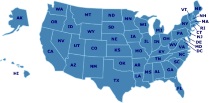
Looking for Another State?
Featured Resources
As an Amazon Associate, we earn from qualifying purchases. We get commissions for purchases made through links on this site.

Should I Home School?: How to Decide What's Right for You & Your Child
Have questions about homeschooling? This book has the answers. The information in this book will help you decide if homeschooling is right for you and your child.
Noah Webster's Reading Handbook
This is the historic text (originally called the Blue-Backed Speller) that has been updated to teach phonics/beginning reading. The blends and words in this reader are arranged to correlate with the sequence in which the special phonics sounds are taught. This reader is an invaluable teaching tool for children who need extra practice in the application of phonics rules. Find out more here.

Minds More Awake: The Vison of Charlotte Mason
Anne E. White explores what is known as the Charlotte Mason, based on the educational philosophy of the 19th century British educator. The goal is to set a child on the path to an intentional, purposeful life. White explores both the practical and philosophical understanding the Mason's practices. White includes lots of examples of how to use these ideas in your own homeschooling.
A History of Science
A History of Science is not a textbook, but is a guide to help parents and children study science through literature. It is intended for children in elementary grades.
The Story of the World
This book series by Susan Wise Bauer is another that is best enjoyed as a read aloud rather than seen as a history textbook. It is full of engaging stories, mixing facts and historical legends. The companion study guides offer questions, narration exercises, activities, crafts, and reproducible pages. There are also lists for each chapter of supplemental books that are easily found at your local library.
Story of the World: History for the Classical Child, Volume 1: Ancient Times (From the Ear...